
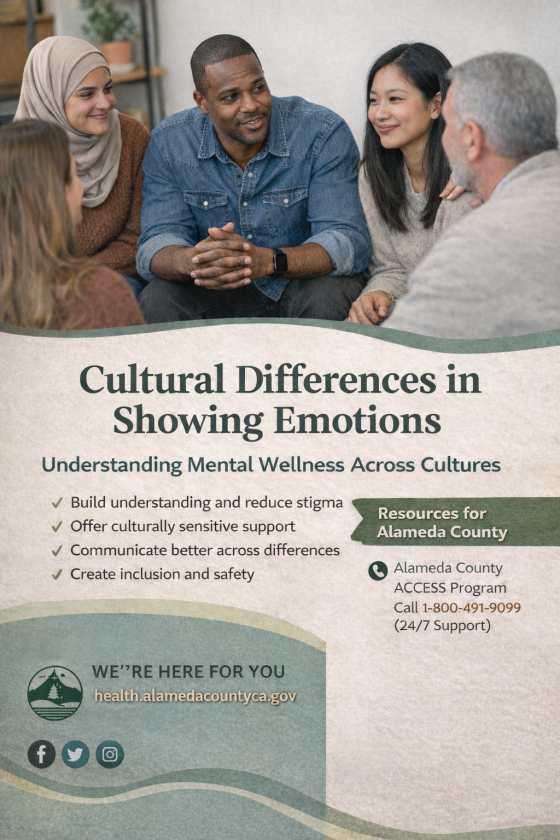
Understanding Mental Wellness Across Cultures
In today’s diverse communities, especially in places like Alameda County, people come from many cultural backgrounds. One important but often overlooked aspect of mental health is how different cultures express emotionsUnderstanding these differences can help reduce stigma, improve communication, and support mental wellness—especially for immigrants adjusting to a new environment.
What Are Cultural Differences in Emotional Expression?
Emotions are universal—we all feel stress, anxiety , happiness, and sadness. However, how we express those emotions is shaped by culture, family values, and upbringing.
- In some cultures, expressing emotions openly is encouraged
- In others, emotional restraint is valued as a sign of strength or respect
- Some families talk freely about feelings
- Others may keep emotions private
There is no “right” or “wrong” way—but differences can sometimes lead to misunderstanding.
Why This Matters for Mental Health
For immigrants, these cultural differences can create unique challenges:
- Feeling uncomfortable talking about emotions
- Difficulty asking for help or accessing services
- Fear of stigma around mental health
- Confusion between cultural expectations and new societal norms
This can lead to internal stress, isolation , or untreated anxiety and depression .
Common Experiences for Immigrant Communities
Many individuals may relate to:
- “I was taught to stay strong and not show emotions”
- “Talking about mental health is not common in my culture”
- “I don’t know how to explain my feelings in English”
- “I feel caught between two cultures”
These experiences are valid—and more common than many people realize.
Moving Toward Balance
Mental wellness does not mean changing your culture—it means finding a balance that works for you.
You can:
- Respect your cultural values
- Learn healthy ways to express emotions
- Build safe spaces to talk (friends, community, professionals)
- Practice self-awareness and self-compassion