
Conflict is a natural part of human relationships. Whether it happens between friends, family members, coworkers, or partners, disagreements are unavoidable when people care, communicate, and live differently. What truly shapes the health of a relationship is not the absence of conflict, but how trust is repaired afterward.
Repairing trust takes time, patience, and emotional honesty. While it may feel uncomfortable or even impossible at first, healing after conflict is possible—and often leads to deeper understanding and stronger connections.
Why Conflict Can Damage Trust
Trust is built on feeling safe, respected, and understood. During conflict, those feelings can be shaken. Words spoken in anger, unmet expectations, or emotional withdrawal may leave someone feeling hurt or unheard. Even when harm is unintentional, the emotional impact can still be significant.
When trust is disrupted, people may:
- Feel emotionally guarded or distant
- Question intentions or reliability
- Avoid difficult conversations
- Experience lingering resentment
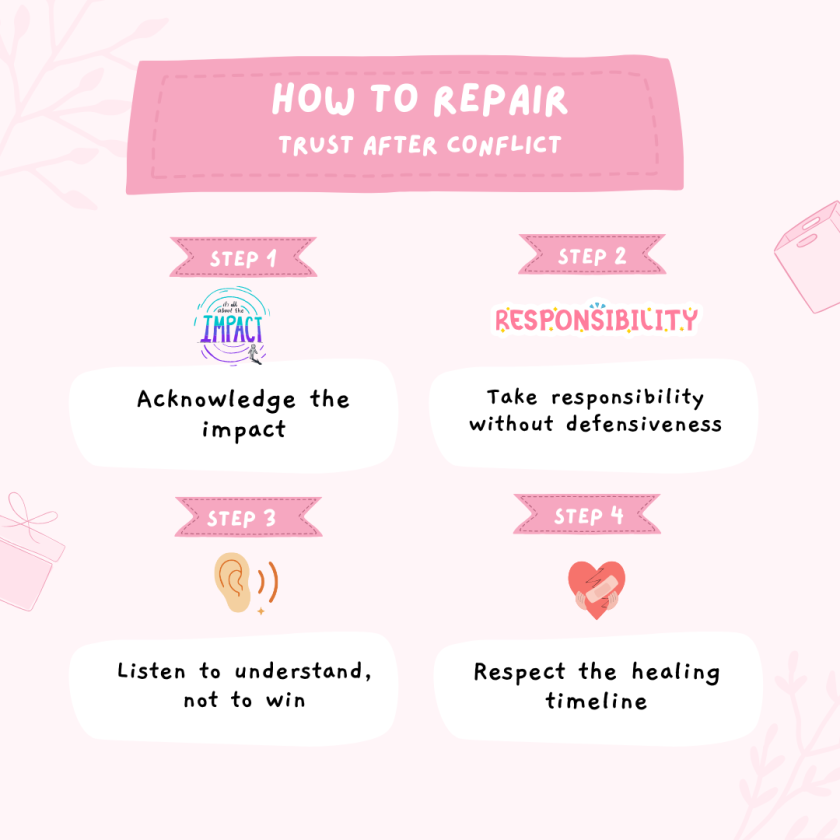
Acknowledging this impact is an essential first step toward repair.
Accountability Comes Before Repair
Repairing trust begins with accountability. This means recognizing how actions or words affected the other person—without minimizing, justifying, or shifting blame. Accountability is not about assigning fault; it’s about taking responsibility for one’s role in the conflict.
A sincere acknowledgment might sound like:
- “I see how my words hurt you.”
- “I didn’t listen the way you needed me to.”
- “I understand why that made you feel unsafe.”
Being accountable creates space for healing by showing respect for the other person’s experience.
The Role of Honest Communication
Open, honest communication is central to rebuilding trust. This involves listening with the intention to understand, not to defend. When emotions are high, slowing down the conversation can help prevent further harm.
Healthy communication during repair includes:
- Allowing each person to speak without interruption
- Naming feelings instead of accusations
- Asking clarifying questions
- Being open to feedback
Trust is rebuilt when people feel heard, validated, and taken seriously.
Consistency Builds Trust Over Time
Trust is not repaired through a single conversation—it is rebuilt through consistent actions. Following through on commitments, showing up emotionally, and respecting boundaries help restore a sense of reliability.
Consistency may look like:
- Repeating respectful behaviors over time
- Checking in rather than assuming things are “fine”
- Demonstrating change through actions, not promises
Small, steady efforts often matter more than grand gestures.
Allowing Time and Space for Healing
Healing does not happen on a fixed timeline. Some people may need space before they feel ready to reconnect, while others may want reassurance and closeness. Respecting these needs is part of rebuilding trust.
Pressuring someone to “move on” too quickly can cause additional harm. Trust grows when people feel their emotional pace is honored.
Repair Strengthens Relationships
While conflict can feel threatening, repair can deepen relationships. When handled with care, conflict becomes an opportunity for growth, understanding, and stronger emotional bonds.
Repair teaches us:
- How to communicate more clearly
- How to honor boundaries
- How to show empathy during difficult moments
At AllyNetwork, we believe that repairing trust is an act of courage. It requires vulnerability, patience, and compassion—from both sides. Conflict may challenge trust, but repair allows relationships to evolve in healthier, more resilient ways.